Recruiter guide / industry insight17 Apr 2026
The roles recruiters secretly love working on
A light, insider look at the kinds of roles recruiters genuinely enjoy working on, and why those searches usually attract better candidates and move faster.
Practical hiring guide
A practical guide to using AI across your recruitment workflow, from role scoping to screening and candidate communication, with suggestions on where it helps most and where human judgement still matters.

Most recruitment teams do not have an intelligence problem. They have a workflow problem.
Too much time goes into rewriting briefs, chasing feedback, cleaning notes, screening inconsistent applications and sending the same updates again and again. Then, right at the point where human judgement matters most, the team is already overloaded.
That is where AI can be useful. Not as a replacement for recruiters or hiring managers, and not as a magic shortcut to better hiring. Used well, it is a workflow layer. It helps structure messy information, speeds up repetitive work and makes decision-making more consistent. Used badly, it can simply automate poor process at scale.
That distinction matters now. In the UK, both the ICO and government guidance have been clear that AI in recruitment can create efficiency, but it also creates risks around fairness, privacy, transparency and over-reliance on automated outputs. The practical answer is not to avoid AI entirely. It is to use it in the right parts of the workflow, for the right reasons, with a human still accountable for the outcome.
One of the best places to use AI is right at the start, before the role even goes live.
Recruitment often breaks when the brief is vague. The title sounds familiar, but nobody agrees on what success looks like, which skills are genuinely essential, or what can be learned on the job. AI can help turn scattered stakeholder input into a clearer hiring brief. That might include grouping requirements into essentials and nice-to-haves, spotting duplicated criteria, translating jargon into plain language and drafting a more consistent scorecard.
This is useful because recruitment quality often depends more on definition than volume. If the role is framed badly, every downstream step becomes noisier. A tighter brief gives you better adverts, better screening and better interviews.
The important caveat is that AI should help refine criteria, not invent them. Human stakeholders still need to decide what the job is, what good performance looks like and which requirements are actually relevant.
AI is also useful for turning a hiring brief into a clearer, more inclusive advert.
That can mean simplifying language, removing filler, making responsibilities easier to scan and pulling out the signals candidates actually use to decide whether to apply. It can also help you check whether the advert overemphasises pedigree, credentials or unnecessary experience when the real need is capability.
This matters because a good advert should be clearer about outcomes and skills, and less dependent on inflated requirement lists. AI can help bring discipline to that process, but the final message still needs a recruiter or hiring manager who understands the role and the market.
A second strong use case is early-stage triage.
This is the part of recruitment where teams drown in volume. Not every role gets hundreds of applicants, but many teams still lose time sorting, tagging and comparing applications that arrive in different formats and levels of quality. AI can help by standardising information, extracting key facts, grouping profiles by relevant themes and highlighting missing evidence against predefined criteria.
That is very different from handing over the shortlist. The distinction matters. AI can help organise the pile, but people should still decide who moves forward and why.
AI can be helpful when your team already has a proper scorecard.
If you know the evidence you are looking for, AI can support a more consistent first review by mapping candidate information against those criteria. It can also flag where evidence is missing, weak or ambiguous. That is often more useful than trying to generate a definitive “fit score”, which can create a false sense of certainty.
This approach is safer and more practical because it supports structured judgement rather than pretending recruitment is fully objective. Use AI to improve consistency, not to hide judgement behind a number.
Recruitment teams often underuse AI in the least controversial area: communication.
A large share of recruiter time disappears into repetitive messages. Application acknowledgements, interview scheduling notes, preparation emails, rejection messages, reminder follow-ups and stakeholder summaries all matter, but they do not all require original writing every time. AI can help draft these messages faster, keep tone more consistent and reduce delays that damage candidate experience.
This is one of the simplest wins because it frees up time without pushing AI into final decision-making.
Another strong area is interview support.
AI can help convert the hiring brief into structured interview themes, draft probing questions linked to the scorecard, and turn messy interview notes into a cleaner summary for the hiring team. After interviews, it can help compare evidence across candidates and pull together decision packs that are easier to review.
That said, interviews are also where over-automation can cause damage. The purpose of an interview is not just to collect keywords. It is to assess judgement, motivation, communication and context. AI can organise notes, but it should not become the unchallenged interpreter of human interaction.
Many hiring delays have nothing to do with talent shortage. They come from internal inconsistency.
One manager wants speed. Another wants perfection. Interviewers use different standards. Feedback arrives late or not at all. AI can help by turning scattered interview feedback into common themes, identifying contradiction between reviewers and nudging teams back to the agreed criteria.
This is where AI becomes less about sourcing and more about workflow hygiene. It helps the process behave like a system. In practice, that can reduce slowdowns, improve auditability and make it easier to explain why decisions were made.
For recruiters, this is often more valuable than flashy front-end automation. Better alignment means fewer re-briefs, fewer resets and fewer “let’s just keep looking” loops that waste weeks.
AI is also useful once the process data starts accumulating.
It can help spot bottlenecks, summarise recurring rejection reasons, identify where candidates drop out, compare time-to-feedback across hiring teams and surface patterns in offer acceptance or decline. That kind of workflow analysis is where AI can support better operational decisions without interfering directly in candidate assessment.
This is where recruitment teams start getting beyond task automation and into real process improvement.
The strongest AI-enabled recruitment workflows still protect certain moments as explicitly human.
Final shortlist decisions should be human. Trade-offs between potential and experience should be human. Reasonable adjustments, unusual career paths, contextual strengths and edge cases should be human. So should any decision that might materially affect someone’s opportunity without a clear, reviewable rationale.
Human review is not a decorative extra. It is part of responsible use.
There is also a practical reason to stay cautious. Recruitment data is messy. CVs are inconsistent. Job histories are non-linear. Interview performance is contextual. If you automate too aggressively, you can scale hidden assumptions, not just efficiency.
For employers, that means being able to explain where AI is used, what information it processes, what influence it has on decisions and how candidates can expect a human to remain involved.
The real opportunity with AI in recruitment is operational, not theatrical.
You do not need to build a fully automated funnel to get value. In fact, most teams would be better off starting with the unglamorous parts of the workflow: shaping briefs, cleaning information, supporting structured screening, drafting communication, summarising interviews and spotting process bottlenecks.
That is where AI makes recruiters better rather than less necessary. It reduces admin, improves consistency and gives teams more time for the work only humans can do well: defining the brief, understanding context, managing stakeholders, building trust with candidates and making balanced decisions.
The mature approach is neither “ban it” nor “let it run the process”. It is to place it carefully inside a workflow that is already trying to be fair, structured and evidence-based.
Start with one workflow pain point, not a grand AI strategy. The best first use case is usually the task your team repeats constantly and hates doing.
Use AI to improve inputs before you use it to influence decisions. Cleaner briefs, clearer adverts and better scorecards create more value than aggressive automation at shortlist stage.
Keep every AI-supported step tied to explicit criteria. If the team cannot explain what good looks like, AI will not solve that problem.
Treat AI outputs as draft analysis, not truth. Review them, challenge them and check for missing context.
Be transparent internally and externally about where AI supports the process. Candidates and hiring teams should not be guessing.
Protect human review at the points where judgement, fairness and accountability matter most.
AI can absolutely improve a recruitment workflow. It can make the process faster, cleaner and more consistent. It can reduce admin, sharpen communication and help teams handle complexity without drowning in it.
But the strongest workflows use AI as support, not substitution.
That means using it in places where structure helps, repetition slows people down and information needs organising. It also means being disciplined enough to keep human judgement where hiring decisions become nuanced, consequential and hard to reduce to pattern matching.
Used like that, AI does not make recruitment less human. It gives humans more room to do the parts that actually matter.
If you are reviewing your recruitment process, start by mapping the stages where your team loses time or consistency. Those are usually the best places to introduce AI support first.
Written by Brendan Woodage
Precision curation journal
Recommended reading
A few nearby essays from the same archive, chosen from other published posts.
A light, insider look at the kinds of roles recruiters genuinely enjoy working on, and why those searches usually attract better candidates and move faster.
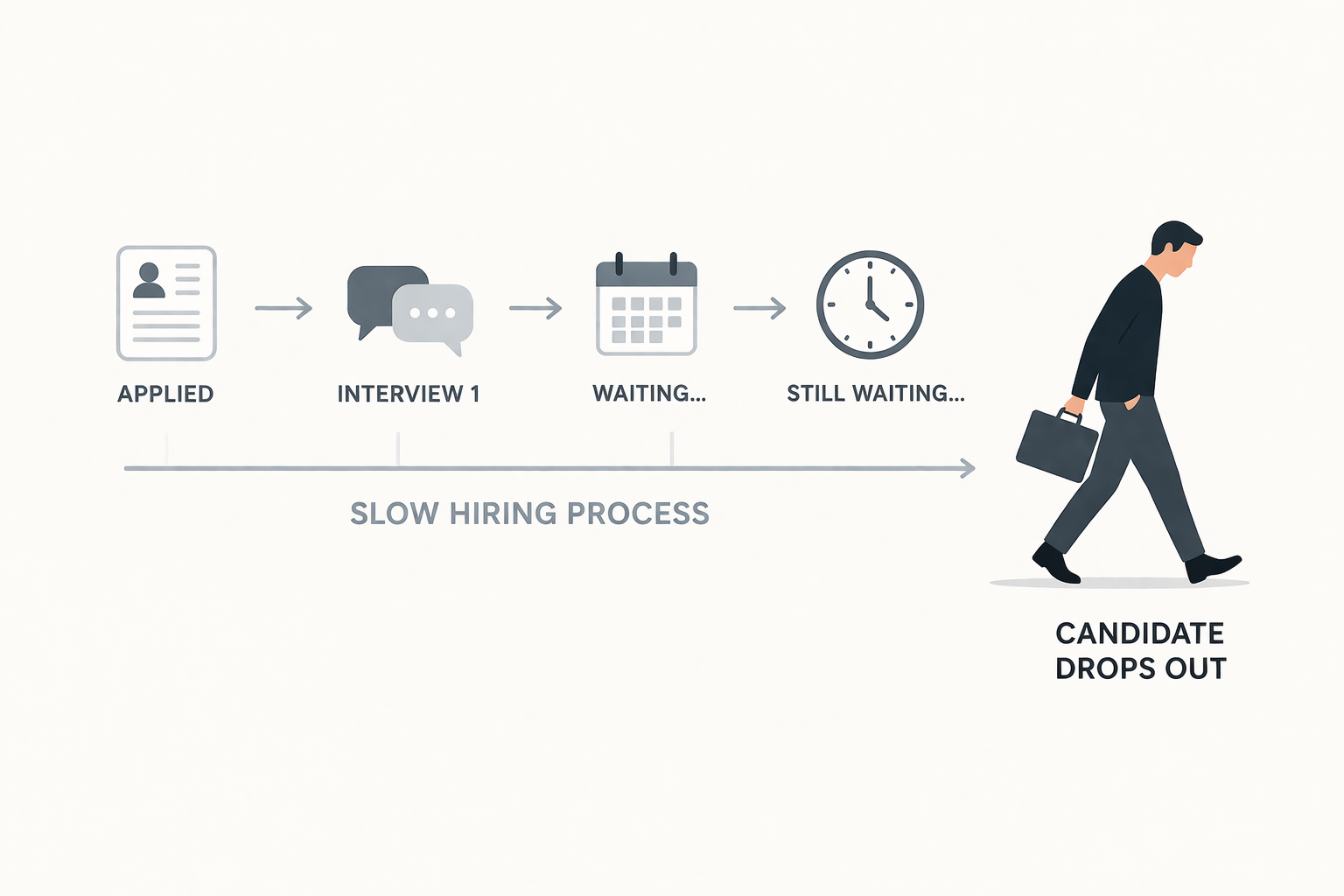
Slow hiring does more than delay a decision. It creates doubt, weakens candidate confidence and increases dropoff. Here’s why good candidates leave slow processes, and how to fix it.
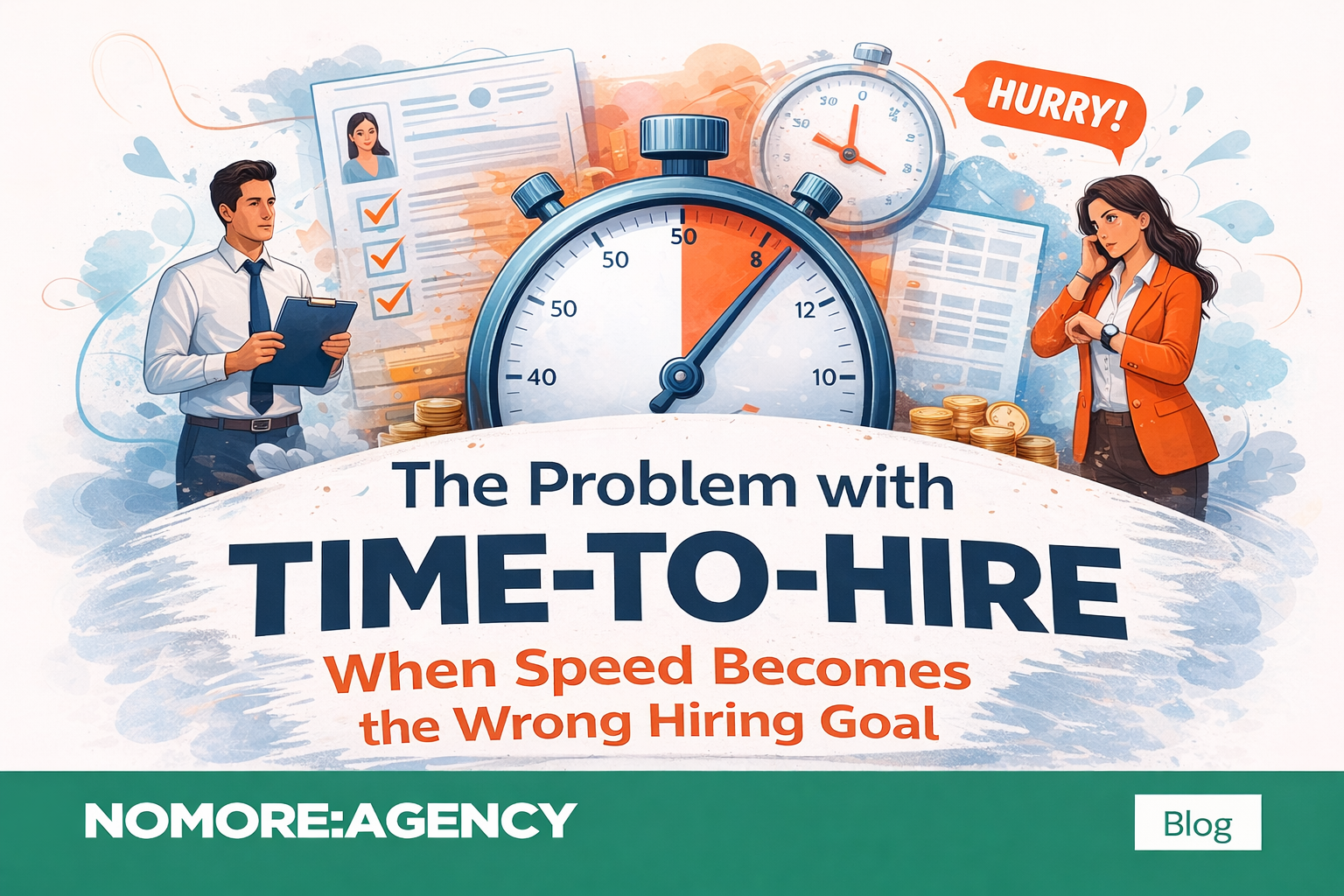
Timetohire is one of the most tracked recruitment metrics. But when speed becomes the primary goal, hiring quality suffers. Here’s what the data says and what to measure instead.